





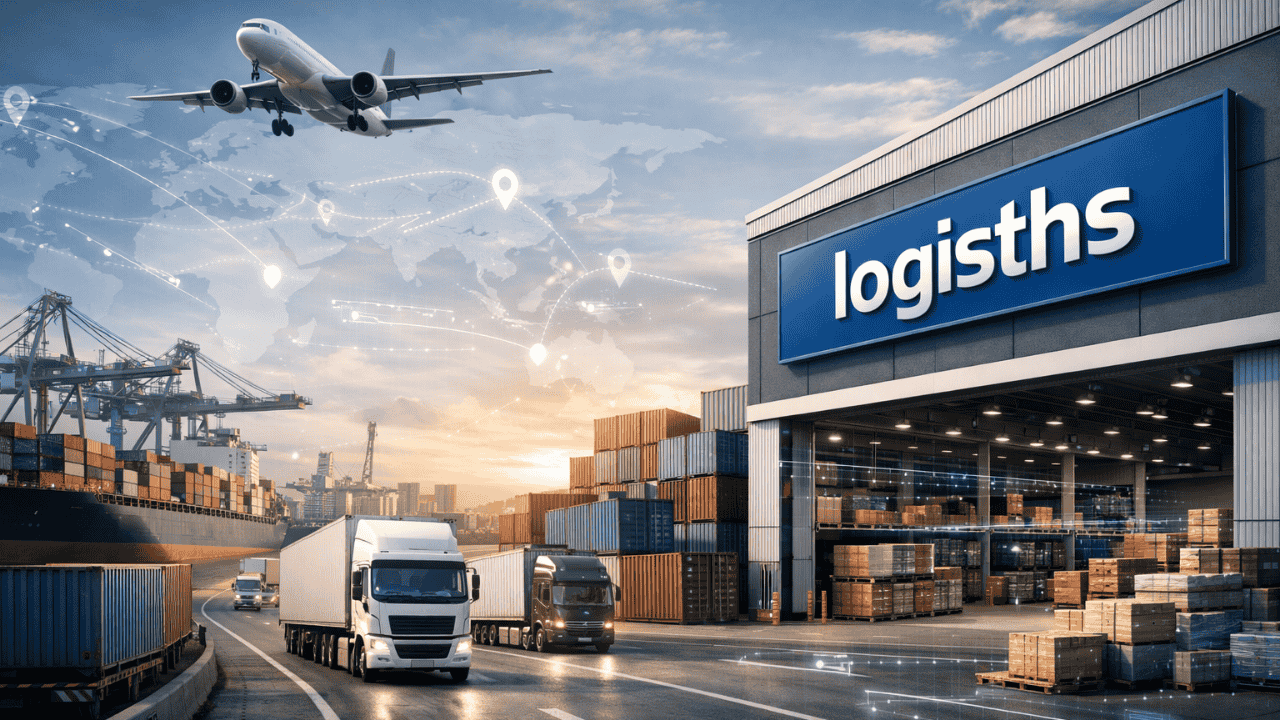
In the fast-paced global economy of 2026, the term Logisths has evolved from a back-office function into the very heartbeat of business success. Whether you are a small e-commerce startup or a multinational corporation, your ability to move goods efficiently determines your survival. But what exactly defines excellence in this field today?
- What is Logisths and Why Does It Matter?
- The Digital Transformation of Logisths
- Sustainable Logisths: The Green Revolution
- Strategic Warehousing in Logisths
- Global Trade and Logisths Challenges
- The Human Element in Logisths
- Key Metrics for Measuring Logisths Success
- The Future of Logisths: What’s Next?
- Conclusion: Taking Action with Logisths
- Frequently Asked Questions (FAQs)
It isn’t just about moving a box from Point A to Point B anymore. Modern Logisths represents a complex web of data, human labor, and automated technology working in perfect synchronization. If one gear slips, the entire machine grinds to a halt.
What is Logisths and Why Does It Matter?
At its core, Logisths is the process of planning, implementing, and controlling the efficient flow and storage of goods, services, and information. It bridges the gap between production and the final consumer. Without a robust strategy, businesses face bloated inventory costs, late deliveries, and unhappy customers.
The importance of Logisths skyrocketed during the global shifts of the early 2020s. We learned that the world is fragile. Today, we don’t just value speed; we value resilience. A company with a “fragile” supply chain might save pennies in the short term but lose millions during the next global disruption.
The Core Components of the Industry
To understand the bigger picture, we have to break the industry down into its fundamental pillars:
-
Inbound Transportation: Getting raw materials from suppliers to the factory.
-
Warehousing: Storing goods safely while maintaining high visibility.
-
Inventory Management: Balancing the “just-in-time” vs. “just-in-case” philosophy.
-
Outbound Distribution: The final leg where products reach the retail shelf or the customer’s doorstep.
The Digital Transformation of Logisths
The biggest trend defining Logisths in 2026 is the total integration of digital intelligence. We have moved past simple spreadsheets. Today, the industry relies on Real-Time Visibility (RTV) to track every pallet across oceans and continents.
Artificial Intelligence and Machine Learning
AI is no longer a buzzword; it is a necessity. Companies use AI to predict demand spikes before they happen. By analyzing historical data and social trends, Logisths managers can position inventory closer to customers before they even click “buy.”
The Rise of Autonomous Systems
From self-driving trucks on dedicated highway lanes to warehouse robots that pick and pack 24/7, automation is solving the labor shortage. These systems don’t replace humans; they augment them, handling the repetitive and physically demanding tasks so people can focus on strategy.
Sustainable Logisths: The Green Revolution
Consumers in 2026 are more conscious than ever about their carbon footprint. This has forced Logisths providers to pivot toward “Green Logistics.” Sustainability is no longer a PR stunt; it is a core KPI (Key Performance Indicator).
Reducing the Carbon Footprint
Many fleets are transitioning to electric or hydrogen-powered vehicles. However, sustainability also involves route optimization. By using software to find the most efficient path, companies reduce fuel consumption and idle time, which is better for both the planet and the bottom line.
Circular Logisths
The concept of a “one-way” supply chain is dying. Circular Logisths focuses on returns, repairs, and recycling. When a product reaches the end of its life, the system ensures it is brought back into the loop rather than ending up in a landfill.
Strategic Warehousing in Logisths
The warehouse is the “brain” of any Logisths operation. In the past, warehouses were just dusty storage rooms. Today, they are high-tech fulfillment centers.
Micro-Fulfillment Centers (MFCs)
To meet the demand for 30-minute or 1-hour delivery, companies are moving away from giant, rural warehouses. Instead, they are using Micro-Fulfillment Centers located in the heart of urban areas. These small-scale facilities use vertical space and high-speed robotics to get orders out the door in minutes.
Inventory Accuracy and RFID
Have you ever ordered something online only to get an email saying it’s out of stock? That is a failure of inventory management. Modern Logisths uses RFID (Radio Frequency Identification) and IoT sensors to ensure that what the computer sees matches what is actually on the shelf.
Global Trade and Logisths Challenges
Operating on a global scale brings a unique set of headaches. From geopolitical tensions to changing customs regulations, the world of international Logisths is a constant chess match.
Navigating Customs and Compliance
Every country has its own set of rules. A single missing document can leave a multi-million dollar shipment rotting at a port. Digital documentation (Blockchain) is beginning to solve this by creating a permanent, unchangeable record of every transaction.
Risk Management and Resiliency
The “Bullwhip Effect” occurs when small changes in consumer demand cause massive fluctuations further up the supply chain. To counter this, Logisths professionals now prioritize Agility. This means having backup suppliers and multiple shipping routes ready to go at a moment’s notice.
The Human Element in Logisths
Despite all the talk of robots and AI, the human element remains irreplaceable. Success in Logisths requires skilled negotiators, creative problem solvers, and empathetic customer service representatives.
Training the Workforce of Tomorrow
The skills required for a career in this field have shifted. Workers now need a blend of physical logistics knowledge and technical literacy. Understanding how to manage a fleet of drones or interpret data analytics is just as important as knowing how to drive a forklift.
Collaboration and Partnerships
No company is an island. The most successful Logisths operations are built on strong partnerships between manufacturers, carriers, and 3PLs (Third-Party Logistics providers). When everyone shares data and goals, the entire chain becomes stronger.
Key Metrics for Measuring Logisths Success
If you can’t measure it, you can’t improve it. To stay competitive, you must track specific data points within your Logisths framework.
-
Order Cycle Time: The total time from order placement to delivery.
-
Transportation Cost per Unit: How much it costs to move a single item.
-
Perfect Order Rate: The percentage of orders delivered on time, in full, and without damage.
-
Inventory Turnover: How quickly you sell and replace your stock.
The Future of Logisths: What’s Next?
Looking ahead, the evolution of Logisths shows no signs of slowing down. We are moving toward a “Lights-Out” supply chain where many processes happen autonomously. However, the focus will likely shift toward Hyper-Personalization.
Imagine a world where the logistics system knows you need a refill on laundry detergent before you do, and it arrives via a drone to your balcony. This level of service is the new frontier.
Conclusion: Taking Action with Logisths
The world of Logisths is vast, complex, and incredibly rewarding for those who master it. It is the invisible force that keeps our shelves stocked and our economies growing. To succeed in 2026 and beyond, you must embrace technology, prioritize sustainability, and never lose sight of the human connection.
Are you ready to optimize your operations? Start by auditing your current supply chain, identifying the bottlenecks, and investing in the digital tools that will carry you into the future.
Would you like me to create a customized logistics optimization checklist for your specific business model?
Frequently Asked Questions (FAQs)
1. What is the difference between Logisths and Supply Chain Management?
While often used interchangeably, Logisths is actually a subset of Supply Chain Management (SCM). SCM is the “big picture” that includes sourcing, procurement, and manufacturing. Logistics specifically focuses on the movement and storage of goods within that larger chain.
2. How can small businesses compete in Logisths?
Small businesses can compete by leveraging Third-Party Logistics (3PL) providers. These partners allow smaller companies to use high-end warehouse tech and shipping networks without the massive upfront investment. Focus on niche markets and superior customer communication.
3. What role does Blockchain play in Logisths?
Blockchain provides a transparent, “unhackable” ledger for tracking goods. It is incredibly useful for verifying the origin of products (like organic food or conflict-free diamonds) and automating payments through smart contracts once a delivery is confirmed.
4. Why is “Last-Mile Delivery” so expensive?
The “Last Mile” is the final leg of the journey to the consumer. It is the most expensive part of Logisths because it involves many individual stops, traffic congestion, and the risk of failed deliveries. It can often account for over 50% of total shipping costs.
5. What is “Reverse Logisths”?
Reverse logistics refers to the process of moving goods from the consumer back to the seller or manufacturer. This includes handling returns, refurbishing electronics, or recycling packaging materials. In the age of e-commerce, having a smooth reverse process is vital for customer loyalty.